Why radon in new construction still needs your attention
When most people think about radon, they picture an older home with a cracked foundation or a damp basement. That image is not wrong, but it is incomplete. Radon does not care about the age of a house. It moves through soil gas and enters through any opening that touches the ground. That is why radon in new construction is a topic that builders, home buyers, and real estate professionals in St. Louis should take seriously. A brand new house with a clean slab and fresh drywall can still have elevated radon levels if the right steps were not taken during the build.
I have tested homes that were less than a year old and found readings above 8 pCi/L, well over the EPA action level. The homeowners were shocked. They had chosen energy-efficient windows, spray foam insulation, and a high-end HVAC system, but nobody had talked to them about radon. That conversation needs to happen earlier, ideally before the foundation is poured. Radon resistant construction techniques exist, and they are not expensive when installed during initial construction. Retrofitting a mitigation system later costs more and involves more disruption.
How radon gets into a new house
Radon is a radioactive gas that forms naturally from uranium in the soil. It moves up through the ground and into the air above. When a house sits on that soil, the indoor air pressure is usually slightly lower than the pressure in the soil beneath the slab. That pressure difference pulls soil gas through any gap or porous material it can find. In new construction, the slab may look solid, but concrete shrinks as it cures. Tiny cracks form around plumbing penetrations, control joints, and the perimeter where the slab meets the wall. The vapor barrier beneath the slab is sometimes torn or missing. The gravel base below might be compacted, but not in a way that allows gas to move freely to a vent pipe. All of these details matter.
Radon in new construction is not a design flaw. It is a natural phenomenon that good building practices can address. The key is to plan for it from the start.
Passive systems versus active systems
Most modern building codes in radon-prone areas require a passive system during new construction. A passive system typically includes a layer of gravel beneath the slab, a vapor barrier, and a length of PVC piping that runs from the gravel base up through the roof. The idea is that soil gas below the slab will naturally rise through the pipe and vent outside, drawn by the stack effect of warm air rising. In theory, this works. In practice, a passive system alone often fails to reduce radon levels below the EPA action level. The stack effect is not strong enough in a single-story house without a chimney, or during mild weather when indoor and outdoor temperatures are close.
That is where an active system comes in. An active system adds a radon fan to the PVC piping. The fan creates a constant suction under the slab, a method called sub-slab depressurization. This active approach pulls soil gas from beneath the house and exhausts it safely above the roofline. The cost difference between a passive system and an active system is mostly the fan and the electricity to run it. If a builder installs the piping and wiring during construction, adding a fan later is a straightforward job. Many homeowners choose to start with a passive system and test after moving in. If the test shows elevated levels, they can add the fan. That is a reasonable strategy, but it requires that the passive system was installed correctly in the first place.
Testing is not optional
No mitigation system, passive or active, should be considered complete without a post-mitigation test. The EPA and the National Radon Program both recommend testing after occupancy, even in new homes with a passive system. I have seen cases where a passive system was installed exactly to code, yet the indoor radon level remained high. The problem was that the PVC piping was not sealed properly at the joints, or the gravel base was too thin to allow good airflow. A post-mitigation test catches those issues. It is the only way to know if the system is actually working.
Radon testing itself is simple and inexpensive. Short-term tests take two to seven days. Long-term tests take three months to a year and give a more accurate average. For a new home, I recommend a short-term test during the first heating season, when windows are closed and the stack effect is strongest. If the result is below 2 pCi/L, you are in good shape. If it is between 2 and 4, consider a follow-up long-term test or adding a fan to a passive system. Above 4, the EPA says take action. That means installing an active system or upgrading an existing passive one.
What builders and buyers should know
If you are building a new home in St. Louis, ask your builder about radon resistant construction. The International Residential Code includes appendix F, which covers radon control methods. Many local building codes have adopted those standards, but enforcement varies. A builder might meet the minimum code requirement without guaranteeing the system will work. That is not negligence. It is just reality. Code minimums are a baseline, not a performance guarantee.
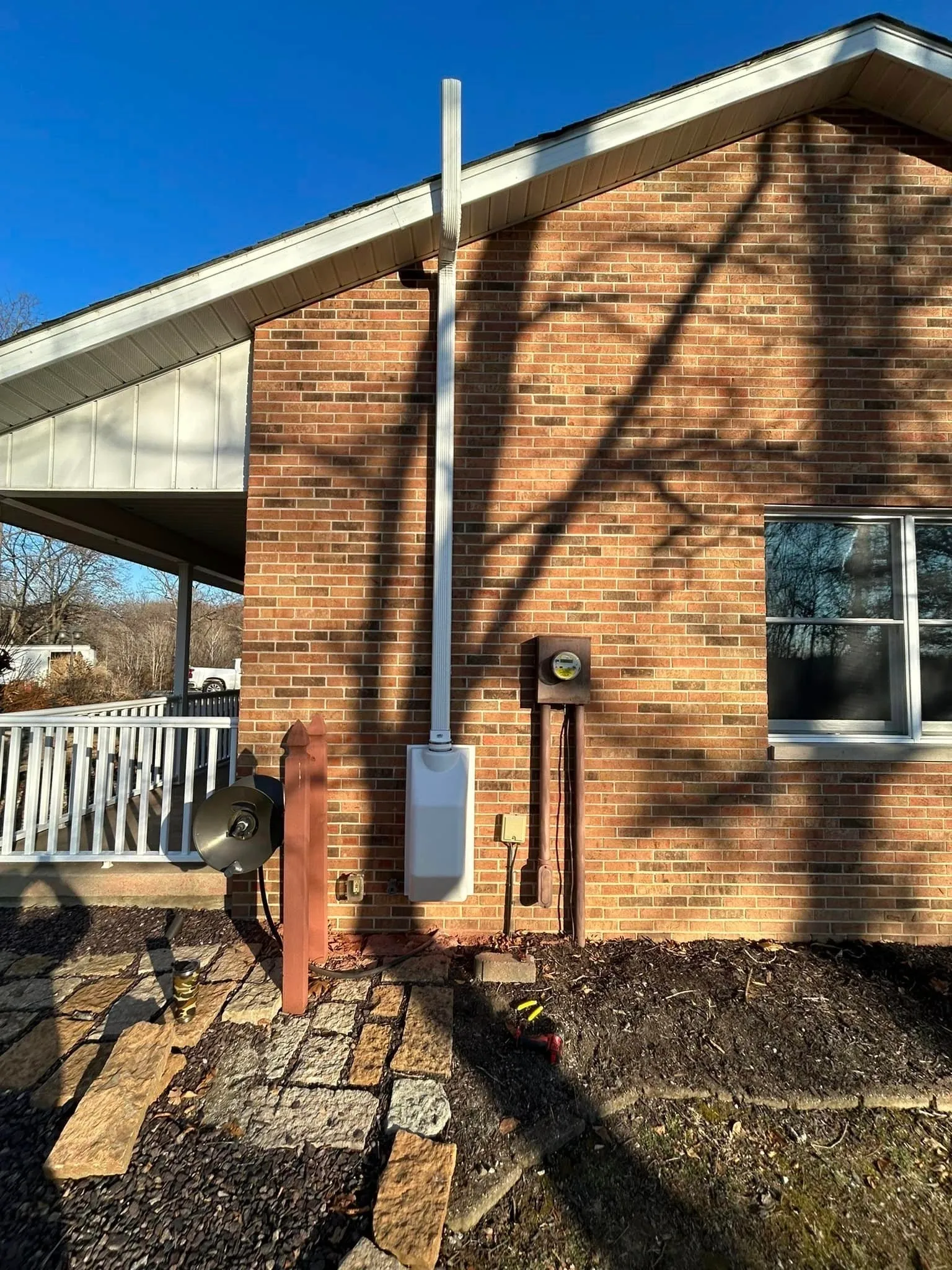
As a buyer, you can ask for three things. First, request that the builder install a passive system with a dedicated vent pipe that extends at least 12 inches above the roof. Second, ask for a sealed vapor barrier under the entire slab, with all seams taped and sealed around penetrations. Third, request that the builder leave a labeled cap on the vent pipe in the attic or on the roof, so a radon fan can be added easily later. These steps add very little to the construction cost and make future mitigation far simpler.
Home inspections during the building process are a good time to check these details. A qualified home inspector can look at the gravel base, the vapor barrier, and the piping before the concrete is poured. Once the slab is down, you cannot see what is underneath. That is why pre-pour verification matters. If you are working with a company like Air Sense Environmental, they can advise on what to look for and even provide a pre-construction consultation. The goal is to avoid surprises after move-in.
Sealing cracks and other details
Even the best sub-slab system works better when the rest of the house is sealed properly. Soil gas can also enter through cracks in the foundation wall, gaps around sump pumps, and openings where utilities enter the basement. In new construction, sealing cracks and joints with polyurethane caulk or hydraulic cement is a simple step that pays off. Some builders also install a manometer on the vent pipe to show whether the system is under suction. That little gauge gives you immediate feedback. If the fluid level is even, the system is depressurizing the soil beneath the slab. If it is not, something is blocked or the fan is off.
I once visited a new development where every house had a passive system installed. The builder was proud of it. But when I tested a few units, half of them had radon levels above 4 pCi/L. The problem was that the vent pipes were terminated in the attic instead of above the roof. That is not a passive system; it is just a pipe that vents into the attic space, which then leaks into the living area. A simple fix, but one that would have been caught by a post-mitigation test before the homeowners moved in.
The bottom line
Radon in new construction is not a contradiction. It is a reality that smart builders and buyers plan for. With radon resistant construction, a well-sealed slab, and a properly installed passive or active system, you can keep indoor levels low. But none of it works without verification. A radon test is cheap. A radon mitigation system is a permanent part of the house. Skipping the test to save a few dollars is a gamble that affects your family's health. In St. Louis, where soil conditions vary block to block, the only way to know is to test. If you are building, build with radon in mind. If you are buying, test after you close. And if the levels come back high, call a professional who specializes in radon mitigation. The fix is straightforward, but it requires the right equipment and experience.